Modern Ceiling Cornices - Guide and Tips
Discover our guide to modern ceiling cornices. Expert advice on choosing and fitting the cornices that will elevate your interior.
Dartank
DARTANK Expert
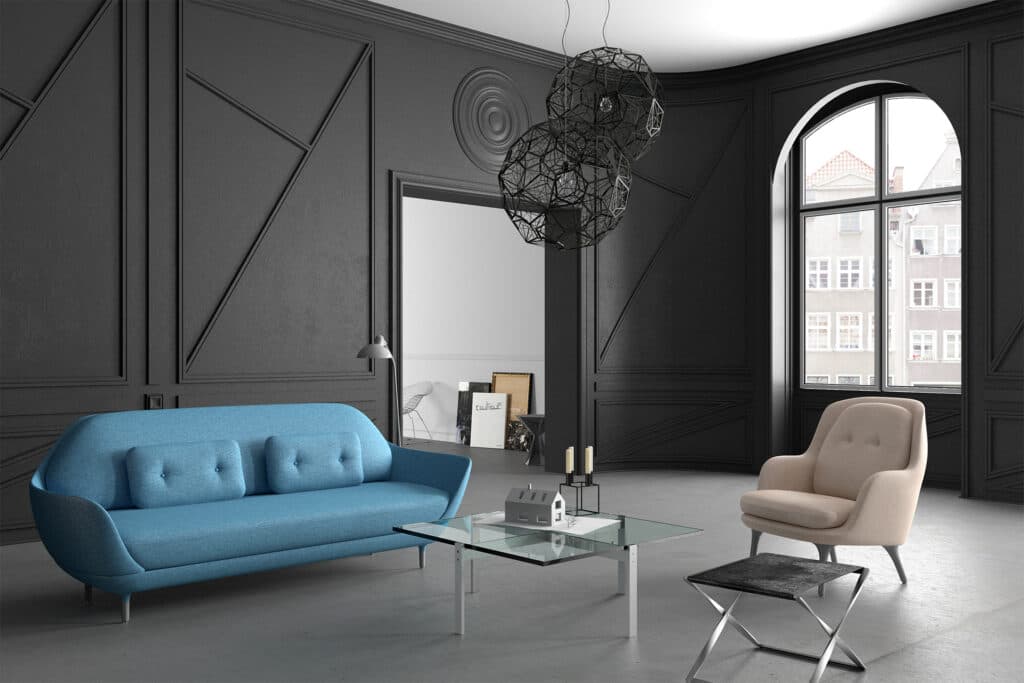
Decorative mouldings are an increasingly common sight in modern interiors. They conceal fitting flaws and exposed wiring, and add a touch of elegance to any decorative scheme. The modern ceiling cornice is a decorative feature that, thanks to its wide choice of designs, shapes and materials, fits perfectly into any architectural and interior style. Discover how modern ceiling cornices can transform your living space, giving it a character of its own and creating a setting that is both contemporary and design-led.
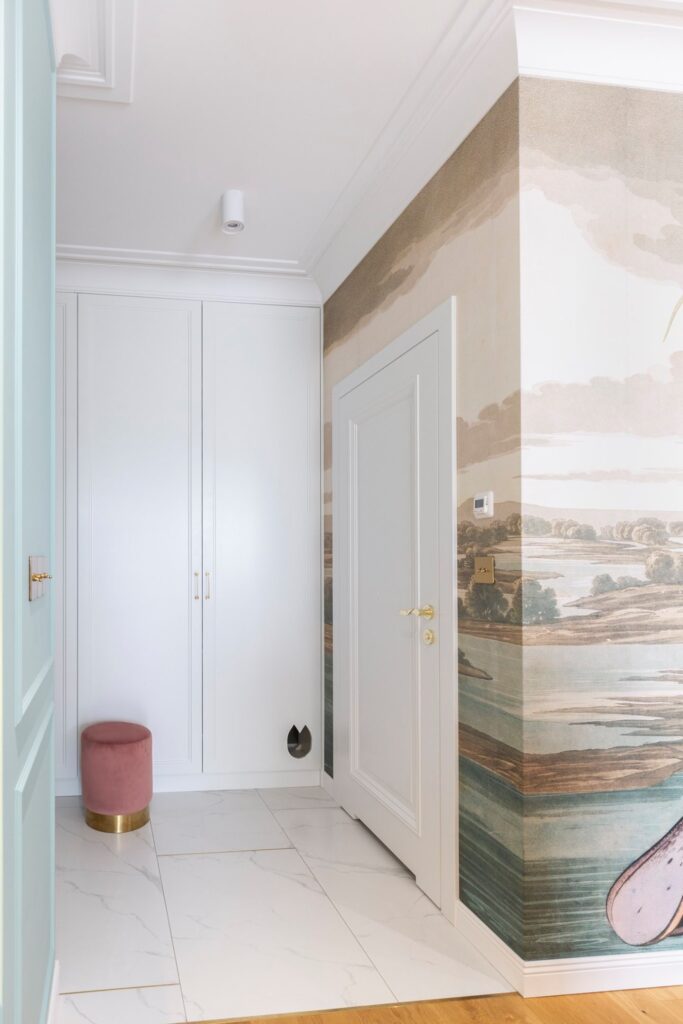
Polystyrene, polyurethane or polymer mouldings?
When choosing the mouldings for your home, several aspects deserve your attention. First of all, the look: the cornice has to meet your design expectations and sit comfortably with your vision for the room. The market offers a wide choice of designs and shapes suited to contemporary as well as classic interiors, as we will see in more detail later in this article. Next, it is crucial to consider the type of material these mouldings are made from. Among the most popular are:
- Polystyrene mouldings
- polyurethane mouldings
- polymer mouldings.
Which moulding should you choose?
Polystyrene mouldings stand out for their light weight, their water resistance and their easy fitting, which puts them within reach even of complete beginners. Available in a broad range of designs and styles, they suit all sorts of interior schemes. However, while they are inexpensive, they can be less hard-wearing and prone to deforming under pressure, which may undermine their lifespan and their decorative effect, particularly on more demanding interior projects.
Polyurethane mouldings, made from polymer plastic, offer greater resistance to moisture and a light weight similar to that of polystyrene. They do, however, call for more precision during fitting so that the patterns run on unbroken from one length to the next. This material makes it possible to create precise decoration and finely detailed ornament. More resistant to mechanical damage than polystyrene, polyurethane mouldings are built to last, even in the most demanding conditions. Their flexibility makes them easy to fit on uneven surfaces and ensures a perfect fit, which makes them an ideal option for interiors with curved walls.
Polystyrene ceiling mouldings are made from polymer plastic and are distinguished by their higher density, which makes them the most hard-wearing ceiling mouldings currently available and guarantees years of use. Polystyrene is a strong, lightweight material, easy to fit even for beginners. Its easy upkeep, thanks to its resistance to moisture and staining, makes it a practical option for rooms around the home. Because of its structure, however, polystyrene is less flexible than its polyurethane counterpart, which can make fitting difficult on uneven surfaces or curved walls.
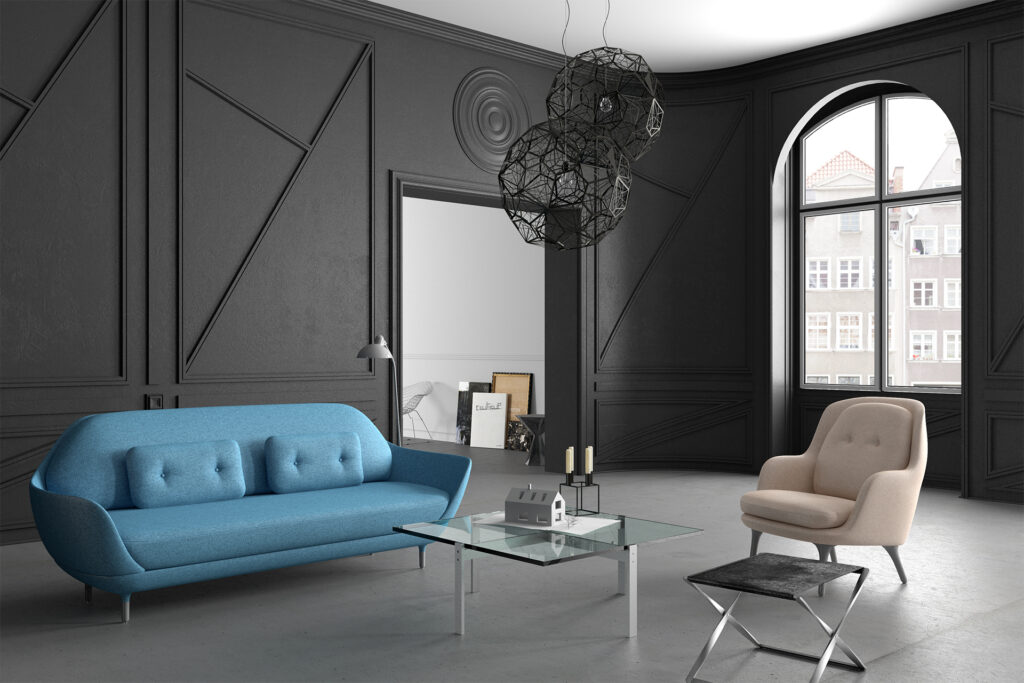
Mardom Decor ceiling mouldings
Mardom Decor stands for craftsmanship of the highest order, made in Poland from an exclusive blend of polymers and special boosters - PolyForce and ProFoam - tailored to the specific needs of the people who use them. These products stand out for their light weight, which makes fitting easier, their exceptional durability and their resistance to water and UV rays. Mardom Decor ceiling mouldings are designed not to swell, fade or yellow, so they keep their flawless appearance for many years after installation.
Our standard models come as smooth white lengths that suit every style of room. Thanks to a high-quality base coat, these mouldings can be painted any colour you like. The special base layer improves pigment adhesion and helps the paint spread evenly over the surface, giving perfect coverage whether you go for a powder pink or a deep black (we recommend using solvent-free products).
Modern ceiling mouldings offer not only exceptional mechanical strength but also great versatility when it comes to decorating. At Mardom Decor you will also find ceiling mouldings fitted with LEDs, a modern alternative to traditional or ambient lighting in a room. These LED mouldings feature the innovative LightGuard® technology, which protects the LEDs without altering how they look on the ceiling while still lighting the room effectively.
The versions available also benefit from the advanced ScratchShield® technology, an exclusive production method that increases the impact resistance of our products by 40%. Mardom Decor is therefore the ideal choice for anyone looking for polymer ceiling mouldings that are both robust and good-looking.
Mardom Decor also offers a special range designed to follow uneven or curved surfaces. Thanks to their high flexibility, Flex mouldings can be fitted on curved walls, making them the best solution for homes with unconventional proportions.
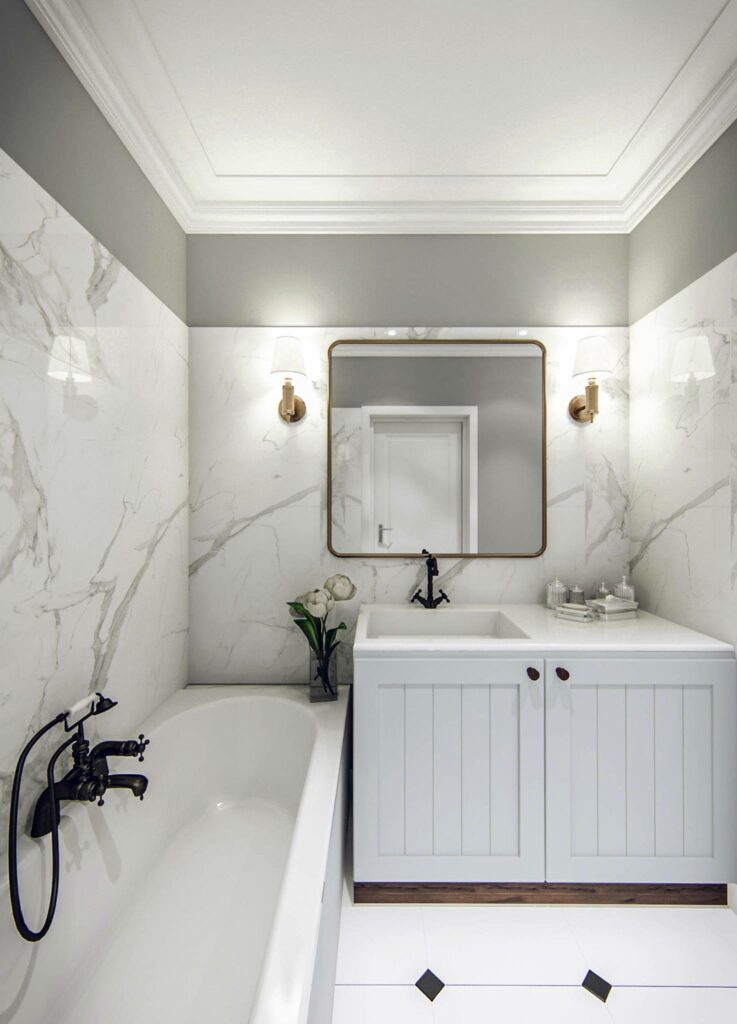
The different types of ceiling moulding available: how do you choose the right one?
As well as guaranteeing excellent quality, the choice of ceiling moulding must also take its visual impact into account. With interior mouldings, we set out to bring out the unique style of our space and make every decorated room look elegant. Ceiling mouldings come in all sorts of forms: elegant ornament, subtle patterns worked into the material, or simple geometric designs, available in large or small dimensions. This great variety is without doubt one of their main attractions, as it allows every model to be matched to our walls and our ceiling. But which criteria should guide our choice?
How do you choose ceiling mouldings?
First of all, appearance is essential: decorative ceiling mouldings, rich in patterns and cross-cut ornament, are a perfect match for classic, glamorous or even vintage interiors. Combined with other decorative elements, they let you create striking arrangements that will enhance not only the ceiling area but also the full height and length of the wall. If you prefer a minimalist style, go instead for ceiling mouldings with simple, geometric shapes, ideal for underlining modern, French or retro schemes.
Another crucial point to consider is how the colours work together and whether the scheme can be refreshed later on, which matters especially in a child's room that may need adjusting over time. White paint remains a classic, universal solution for any interior, but sometimes the design calls for contrasting shades or colours matched to the wall. In that case, it is wise to choose ceiling mouldings specifically designed to be painted.
The choice of moulding must also take the dimensions of the room into account: in a small space, a profile that is too wide and too richly decorated would risk overloading the room and drawing attention to its flaws. Go instead for mouldings around 6-7 cm high. For standard rooms, a height of around 10 cm is generally right, while in more spacious rooms such as those in old stone houses, taller, wider and richly decorated mouldings will sit perfectly beneath the ceiling.
Finally, the shape of the moulding must suit the interior of your home: for curved surfaces, go for Flex lengths, which follow the line perfectly and give an elegant, harmonious result.
In short, at Mardom Decor we offer a range of ceiling mouldings to suit every interior, including rooms such as the bathroom or the kitchen, resistant to climatic variations such as changes in temperature and humidity.
How do you fit ceiling mouldings?
Thanks to their light weight, polymer ceiling mouldings are quick and easy to fit, even for inexperienced users. To begin with, it is essential to prepare the wall and the ceiling carefully: degrease them and make sure they are free of damp and damage. Fill any holes, remove any flaking paint and make sure the surface is perfectly smooth before you start fitting the mouldings. Only a properly prepared surface guarantees a successful installation.
Next, measure the length of the wall where you want to fit the mouldings, prepare the number of lengths you need and cut them to the right size, particularly in the corners.
How do you cut the mouldings at the corners?
In the corners, it is best to cut the mouldings at a 45-degree angle. Use a hand saw with a fine, well-sharpened blade to minimise the risk of melting or damaging the material. Cut at a slow, steady pace for precise results.
Which adhesive should you use to fix the mouldings?
For a strong, lasting fix, use a high-quality, hard-wearing adhesive such as Mardom Max, developed specifically for the job. This adhesive grips firmly and dries in just 8 seconds, making for quick, efficient fitting on the chosen surface.
Besoin de conseils personnalisés ?
Nos experts sont à votre disposition pour vous accompagner dans vos projets de décoration.
Contactez-nous